Mortgage Savings Secrets Most Canadians Never Hear: Beyond the Interest Rate
Most Canadians laser-focus on getting the lowest mortgage rate — and miss the savings that are three times bigger. In this episode, Scott Dillingham reveals the mortgage features, penalties, portability clauses, and CMHC tricks that can save tens of thousands over the life of you…
Show notes
Most Canadians laser-focus on getting the lowest mortgage rate — and miss the savings that are three times bigger. In this episode, Scott Dillingham reveals the mortgage features, penalties, portability clauses, and CMHC tricks that can save tens of thousands over the life of your mortgage, regardless of your rate.
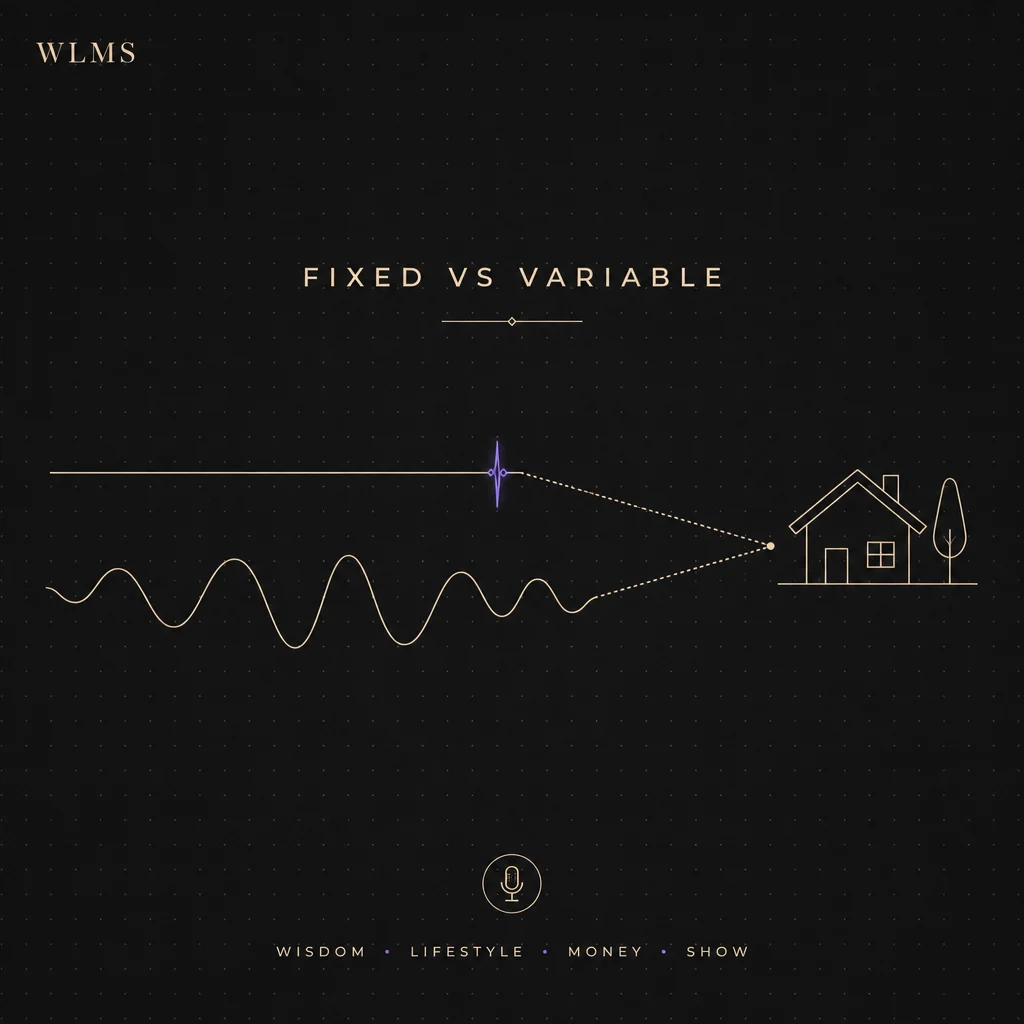
He discusses penalty-free refinancing via "refinance blends," the fixed vs. variable debate (variables averaged 4.75% over 25 years, safer amid 2025's improving economy with BoC cuts to 2.25%), combining mortgages with segmentable lines of credit for flexible borrowing (e.g., for cars or investments), maximizing prepayments up to 20%, and incorporating renovations via "mortgage plus improvements" (up to $40,000 or 20% of purchase price) to avoid high-interest credit. Scott also offers a $300 appraisal rebate for LendCity clients. With 2025 forecasts showing slight affordability gains from lower rates (prime at 4.95% mid-year) but 10% higher renewal payments, this episode equips Canadian homebuyers and refinancers in Ontario and beyond to save an average $45,000 on a $500K mortgage by aligning needs with lender features.
Host Bio
Scott Dillingham is the founder and CEO of LendCity Mortgages, a premier online mortgage brokerage specializing in financing for real estate investors across Canada and the USA. As host of The Wisdom, Lifestyle, Money Show, Scott draws from his own journey—from sales excellence at Future Shop to building a multi-property investment portfolio—to educate listeners on mortgages, investing, and personal growth. Based in Windsor, Ontario, he has achieved top national rankings in mortgage sales and now leads a team helping Canadians secure creative financing solutions. Connect with Scott on Facebook at facebook.com/scott.dillingham or visit lendcity.ca for mortgage advice and resources.
Key Takeaways
- Port CMHC fees when upgrading homes to credit the original amount and only top up the difference, potentially saving thousands in premiums.
- Request partial charges at closing to register only the borrowed amount, slashing title insurance fees (e.g., from $3,000 to $700 on a $2M purchase) and preserving equity access.
- Choose lenders using discounted rates for penalties on fixed mortgages to cut breakage costs nearly in half compared to posted-rate calculations.
- Opt for penalty-free refinancing via "refinance blends" to access equity without fees, blending remaining terms with new rates.
- Consider variable rates (averaging 4.75% historically) amid 2025's low BoC rates (2.25%), with the option to lock into fixed if the economy improves.
- Combine mortgages with segmentable lines of credit for penalty-free payoffs on bonuses, inheritances, or investments, keeping statements separate for easy accounting.
- Maximize prepayments (up to 20% with some lenders) and build in renovations via "mortgage plus improvements" (up to $40K) to avoid high-interest credit and customize your home upfront.
- Claim LendCity's $300 appraisal rebate with the eBook coupon, plus align with lenders matching your goals to save an average $45K on a $500K mortgage.
- (00:07) - Saving Money on Your Mortgage
- (01:11) - Porting CMHC Fees
- (02:09) - Lowering Closing Fees
- (03:45) - Understanding Mortgage Penalties
- (05:22) - Fee-Free Refinancing
- (06:48) - Fixed vs. Variable Rates
- (09:06) - Line of Credit Strategies
- (12:01) - Prepayment Options
- (14:08) - Mortgage Plus Improvements
- (16:10) - The $300 Appraisal Rebate
Transcript
Introduction
Welcome to the Wisdom Lifestyle Money Show. I'm your host, Scott Dillingham. The show is designed to help Canadians invest better in Canada and the United States. We are the North America-based mortgage financing lender and provide education to both countries.
Discover how you can become a better investor and access the financing you need. Thanks for tuning in today. Today's show, I'm gonna reveal to you how to save the most amount of money when you're qualifying for your mortgage. Most clients think, let's just get the lowest rate, that's how to save the most on your mortgage, but that couldn't be farther from the truth.
Rate is only maybe one-tenth of how you can save on your mortgage. Now, I've been lending for more than 10 years now, and a lot of the things I'm gonna share with you today, most brokers and bankers, they don't even know that these things are an option, so I'm gonna share them with you to show you how you can help them save. Now, what inspired this show was the fact that I actually made a mini book about this. So, you can pick up the book in our office, free of charge.
We're at 4769 Wyandotte Street East in Windsor, or if you wanna download the electronic version, just go to our website, which is LendCity, so that's L-E-N-D-C-I-T-Y dot C-A, and then when you're there, click the eBooks tab, and then you'll have the download link there to do it. But I'm gonna dive into some of the topics. If I can cover them all in this episode, I will, but I'll dive into as many as I can, and then we'll go from there. One of the first ways that we're gonna talk about to save you lots of money on your mortgage is porting your CMHC fees.
The Core Idea
So this is a very uncommon practice, but it can result in huge savings for you. So when you port your home, most people know you bring your mortgage with you, and you get the new home, but your CMHC fees are portable too. So for an example, let's say you bought the home for 250, and then you're purchasing a new home for 500, and you're porting. So CMHC will give you a credit for the first 250,000 of your home, and then they'll do what's called a top-up of the balance.
So you're not paying the full CMHC fee. This tip alone can result in a huge savings for you. Okay, so make sure you ask your lender if they're porting your CMHC fee. And if they tell you no, ask them why, because you could be saving tons just by that tip alone.
Another tip is lowering your fees at closing time. So there's two ways a lender can register your mortgage. They can do a full charge, which means the lender registers 100% of the purchase price against the title of your home, or there's a partial charge where the lender only registers the amount that you're borrowing from the home. We encourage you to ask your lender, and it doesn't matter the lender that you work with.
Most of them will be able to change this for you. So you just tell them you only want them to register the amount that you're borrowing, not the full amount. So by doing that, I'll give you a perfect example. We had a client, he bought a home for $2 million.
Deep Dive
The lender wanted to charge him a $3,000 title insurance fee, because we're doing it as a, like, we're using the lender's in-house lawyer. So the title insurance fee was going to be $3,000. And I said to the lender, I'm like, no, don't do that. Register the lending amount, which was only for 1 million.
Just by doing that, the title insurance fee went from $3,000 to $700. So they saved $2,300 just by us lowering it to a partial charge. Obviously the purchase price of your home will have a major impact on the amount of the fees. So the smaller the house, the smaller the fees.
But regardless, just by having them register a partial charge will save you money. The other benefit to you is down the road, if you're looking to get additional financing, you'll be able to. Whereas if the lender registers the full charge of your property, there's no equity that you'd be able to access through another lender.
So this gives you more flexibility. Okay, so the third strategy that we discuss in this guide is mortgage penalties. So there's a very drastic difference in the way that mortgage penalties are calculated. So if you get a variable rate mortgage, most of the lenders are going to just charge you a simple three months interest penalty.
Practical Steps
Pretty standard. But if you get a fixed, there's a couple of ways the lenders will calculate this. So with the fixed, they can calculate it either using the posted rate. So the posted rate is the mortgage rate without any type of discounts.
It's like the regular priced rate. And then there's a discounted rate. So when you have a lender, like most major banks, they calculate this on the posted rate. And when you get your penalty, it can be quite high.
Where we have access to multiple lenders and they use the discounted rate. So the rate that you're being given or something very similar to when they calculate the penalties. So just by going from lender A to lender B, you can save nearly half of your mortgage penalty just based on how they calculate. Now, a lot of people buy their homes and they think I'm never going to need these prepayment options or I'm not worried about my mortgage penalty because I'm going to stay here forever.
But in all reality, everybody, not everybody, but the average amount of time that someone keeps their mortgage is for three years. Then they're either selling, they're moving, they're refinancing, like they're doing something with their mortgage. It's triggering penalties for tons of people. So just by picking the correct lender right off the bat, it will save you tons on your penalties.
Key Takeaways
Now, the fourth tip or strategy is can you refinance your home fee free? So many lenders charge you a mortgage penalty when you refinance your home. And again, as I mentioned in the previous step, about three years is the average time that somebody keeps their mortgage for. Now, there are lenders out there that allow you to refinance your mortgage without penalty, and it's called a refinance blend.
So how they do that is, say you've got a five-year fixed and then one year into your term, you decide that you want to refinance it. So what they'll do is they'll keep the remaining term that you had left, which would be four years in this scenario, and they'll do the refinance based on the four-year fixed rate at that time. And so the five-year fixed money that you had at that point in time stays the same. Then they add on what you're asking to refinance.
They add that on at the four-year fixed rate and they blend everything all together for one nice payment for you. But there's no mortgage penalty in those scenarios. So that's something else that you should ask when you're qualifying for a mortgage. Ask your lender if you can refinance it later without penalty.
If they say no, I would probably switch or again, speak to someone like Lent City and we'll go over the lenders that will allow it and will not allow it. So just by knowing these things proactively can save you tons of money down the road. So another strategy is the fixed versus variable debate. So I have a picture in our book and it shows you the fixed rates and the variable rates over the past 25 years.
Resources
75 was the average fixed rate over the past 25 years. Now, keep in mind that this goes back as far as January of 1995 when rates were at 10%. So you have to consider that where now obviously it's much lower.
It's like low twos. Even some lenders on the five-year fixed are below 2%. But keep that in mind, that's the average. But the five-year variable rate, the average is about 5%.
Actually a little less than that. 75% is the average for the variable over the last 25 years. Now, a lot of customers that we have, they're fearful that if they get the variable rates, their payments and that can increase, which it can, but the variable rate, they tie it to the economy and they try not to change the variable too much because car loans, credit cards, there's a bunch of things that are tied to variable. They only raise it when they raise the variable.
It's only by decimal two five of a percent at a time. And then they analyze the market, see how it's affecting things. And if it's affected things greater than they anticipated, they'll keep the variable rate stable. And then they'll check the market a little bit later and see what rates are doing then.
Introduction
So overall, the variable has been a lot cheaper than the fixed and it has lower penalties to get out of. And another cool thing is if the economy is doing exceptionally well, that's when the variable rates start to go up. So if you do get a variable rate when the economy's fair or okay, and then you see the economy go up, you can lock in at any point in time and that will allow you to get the safety net of the fixed again. So I encourage people, consider the variable, see what the economy is doing, especially things like COVID where it's holding the economy down.
I think the variable rate is definitely safe with COVID right now. But of course, if the economy is improving, you may want to lock in. We have to stop for a quick break, but stay tuned because when I come back, I'm going to show you how you can get $300, but I'm also going to show you the other tips and strategies to save the maximum amount of money when you're qualifying for a mortgage.
Welcome back. So now I'm going to dive into a line of credit or a mortgage or both. So when you're buying your home, if you're going to be getting a large annual bonus at the end of the year, if there's some type of inheritance, or if you're buying a home, like if you're qualified today, but you have not sold your home yet, then you may want to get a line of credit as well as a mortgage. So a lot of banks or lenders will try to get the client to maximize their mortgage because if you ever make a larger pay down than what your mortgage allows, they can charge you a penalty.
Plus it locks you in because the line of credit, it's a revolving product. It's fully open, paid off, no penalties. So the lenders do prefer you to get a mortgage. Now, if for example, you're not going to have extra funds immediately, then it will absolutely make sense to get a mortgage because the mortgage has a lower interest than a line of credit.
The Core Idea
So when you're qualifying for your home, you have to consider what's happening over the next year. If you anticipate any type of bonus or inheritance, or again, you're selling your home, then what I would do is I would shrink the size of your mortgage and increase the line of credit so you can pay it off without penalty. And then you've just got your regular mortgage. Now with lines of credit, there's also multiple, there's multiple ways that a lender can get a line of credit for you.
You can do the lender, which will give you just a line of credit for the full balance. So say you go in there and you say, I want a line of credit for 200,000, and it's just one line of credit.
You can do that. Or there's also lines of credit, which you can segment. I personally like the segmented lines of credit.
So for an example, say you need a car. Line of credit interest rate, more often than not, unless it's like a 0% financing, usually lines of credit are cheaper than borrowing for a car. So in this case, say the car was 50 grand, you could segment 50 of that $200,000 line of credit and say this is for the car loan. And you'll have separate statements for that.
Deep Dive
So if you use the car for business, you'll have separate receipts for write-off. So it's very easy. Or as part of what we do at Lent City is we show investors how to invest in real estate and grow their money. And we partner with people who show them how to invest in the stock market and options and all those other things.
So a lot of investors will use their lines of credit for specialized investments. So you want a line of credit where you can segment the debt so you can have separate accounting.
It makes it really awesome. Your accountant will absolutely love it.
Okay. Another thing that you need to look at when you're qualifying for a mortgage is can you prepay your mortgage and by how much? And I'll give you a perfect example. Most of the major banks and major lenders will allow you to prepay 10% of your mortgage if you choose a five-year fixed.
Practical Steps
So that sounds okay, but it's still limited because some lenders will allow you to pay up to 20% of your mortgage if you get a five-year fix. That may or may not be a bad thing, right? You need to look at your available funds coming in and again, what you anticipate being able to pay down. Because if you can't pay down any extra, then it doesn't matter what the prepayment options are.
So you need to look at the budget, what's coming up, and then determine how much you want to prepay. The other thing with some of the low mortgage interest rates that you see out there, the ones that are artificially low, like super low, like unheard of, that sound too good to be true.
Usually they are. They have hidden clauses in there, like you can't refinance them.
You can't pay them down. If you try to get rid of the mortgage, they won't let you. The only way you can actually get rid of the mortgage is if you sell your home. So you have to be very careful because I do see clients falling into that trap and then they come to us after and they're looking to, they need to take money out of their home because they want to renovate some of their property and they can't.
Key Takeaways
They're stuck. So you just have to be very careful because sometimes getting the lowest rate, it really is not the best. Now that is something that we do as a broker, right? Because we work with multiple lenders is that we do check them and we try to match your needs and what you want with your goals to the lender that has the best rates who can not only meet your goals, but also approve you because you don't want to apply and get your hopes up that you're going to get something that you're not qualified for.
So keep that in mind as well that the lowest rate is absolutely not the most important. You have to determine and look at your whole financial picture and then make those decisions. Another tip for saving some money is mortgage plus improvements, right?
You can add improvement funds. Usually it's up to $40,000 or 10 to 20% of your purchase price depending on the lender. And by adding the renovations to your mortgage rate up front, you're not using credit cards or expensive store credit to finance the renovations. And you get to do this right up front when you acquire the home.
So then when you move in, the house is exactly what you want it to be instead of living with it and later on trying to refinance it. And if you've went with the wrong lender and you refinance, right? Then you've got a mortgage penalty. So it's often cheaper to build renovations into your mortgage right from the get-go.
Resources
Now there are lenders that can do a lot more than $40,000 but they would structure that like a construction mortgage not a mortgage plus improvements. And there's different rules to that such as there's probably going to be progress draws where they fund your renovation in stages which is much more advanced than the plus improvements. Now how the mortgage plus improvements works is you supply your lender with a quote for the improvements and then the lender will confirm with the appraiser that your home will be worth that much money when the renovations are done.
And if everything lines up they hold the money in trust you complete the renovations and then they release the funds to you. Now one little thing that I've seen with that just from experience is that sometimes the contractors that do the renovations they want to get a large deposit up front and then they get paid at the end. So what we've done for our clients and we'll do it for you too is we'll write you a letter telling the contractor that you're approved and you're good to go and you're going to get the funds as soon as the renovation's complete and usually by showing them that letter they're okay and they'll move forward right?
Because a lot of times like I said they want their deposit up front but if they know you're getting the funds and it's built into your mortgage usually they will work with you. So that's it for the tips. Now for the $300 so every client of Lend Cities what we do is we actually give you a $300 appraisal rebate as soon as your mortgage funds. So if you're looking to refinance or if you need an appraisal on your purchase and there was a cost associated with it we will give you the $300 rebate as soon as it closes.
So that's something we do for all clients but you have to have the coupon. So the coupon is in the book so you can download the book. ca and you click ebooks and you just put in your email address and we'll email you the book or you can pop in at any time we've got a bunch of them printed and we'll give you the hard copy of it and then you can use that for savings. There's no expiry date so even if you're not ready today and you're thinking of moving in two years that's fine.
Introduction
The coupon will still be good for then. But thanks so much for tuning in today. I hope this was valuable for you. On average like if we look at the numbers on average we save clients about $45,000 just by having this information about the hidden fees and things like that.
Now that's based on a $500,000 mortgage just from the clients that we've personally worked with. Every scenario is different. Some clients we could save more, some less. But that's with us knowing what lenders to work with to save you the most money.
And that's something by default that we do every single customer we work with. We always try to partner them with the best for their needs to save them the most money without you even asking. But if you have someone that you work with and you want to stay with them, you'll now know the right questions to ask so that way you can start saving money.
Thanks so much for tuning in. I can't wait to chat with you next time. Thank you so much for tuning into the show today. If you found value, please follow the show and rate it five stars.
The Core Idea
It would mean the world to me. And lastly, all the resources that we spoke about are at the bottom of the show notes. Looking forward to seeing you on the next episode.