Easy Mortgage Qualification for Canada & USA Real Estate Investors: DCR & DSCR Guide
In this episode of the Wisdom Lifestyle Money Show, host Scott Dillingham, President of LendCity Mortgages, dives into strategies for qualifying for investment property mortgages in Canada and the USA without relying solely on personal income. He explains how investors can levera…
Show notes
In this episode of the Wisdom Lifestyle Money Show, host Scott Dillingham, President of LendCity Mortgages, dives into strategies for qualifying for investment property mortgages in Canada and the USA without relying solely on personal income. He explains how investors can leverage the property's cash flow through Debt Coverage Ratio (DCR) programs in Canada and Debt Service Coverage Ratio (DSCR) loans in the USA. Drawing from his experience starting in banking and transitioning to specialized investor financing, Scott highlights how these options allow real estate investors to scale their portfolios beyond traditional lender caps, which often limit properties to 4-10. He emphasizes avoiding high-rate private equity loans by choosing lenders who focus on the asset's performance, enabling full-time investing without a 9-to-5 job.
Scott breaks down key differences: In Canada, DCR applies to residential and commercial properties, including single-family homes (though harder) and mixed-use, with up to 80% loan-to-value (LTV) on purchases or refinances. However, a mortgage stress test—qualifying at least 2% above the contract rate or 5.25% (whichever is higher)—makes it tougher, and lenders may scale back LTV if cash flow is insufficient. In the USA, DSCR loans are more lenient with no stress test, interest-only options, and even 40-year terms to boost qualification. LTVs are typically 75% on purchases and 65-75% on cash-out refinances for foreign nationals (like Canadians), with some lenders allowing up to 80% on stabilized properties. He warns against over-relying on BRRRR strategies in the USA due to conservative LTVs for non-residents and notes that mixed-use properties may not qualify under DSCR.
This episode is packed with practical advice for investors aiming to retire from traditional jobs and grow unlimited portfolios, as most DCR/DSCR lenders have minimal caps once debt is sold or switched. Scott stresses running upfront cash flow analyses—including rents, taxes, insurance, and HOA/condo fees—while factoring in Canadian expenses like vacancy and repairs (often using 50-75% of rents). For optimal rates, prioritize positive cash flow; otherwise, expect higher rates or reduced LTVs. Updated for 2025, with USA DSCR booming due to tech-driven closings and Canada maintaining strict stress tests amid stable markets, this guide helps avoid common pitfalls and build wealth through informed lending.
Key Takeaways
- Qualify on Property Cash Flow: Use DCR in Canada or DSCR in USA to approve mortgages based on rental income covering debt, bypassing personal debt-to-income ratios and property caps from traditional lenders.
- Canada DCR Specifics: Up to 80% LTV on rentals/mixed-use; stress test at 2% above rate or 5.25%; single-family possible but prefer 2+ units; scale back LTV if no cash flow, including vacancy/repair factors.
- USA DSCR Advantages: No stress test; interest-only and 40-year terms available; 75% LTV purchase, 65-75% refinance for foreign nationals; easier qualification excluding vacancy costs, but mixed-use often ineligible.
- Avoid Private Equity Traps: Steer clear of high-rate private loans; consult experts for upfront analysis on rents, taxes, insurance, and fees, which vary by loan size/complexity/rush.
- Unlimited Portfolio Growth: Most lenders allow ongoing funding after debt sales (USA cap example: 15 deals); switch institutions in Canada if market overexposure hits.
- Investor Strategy Tips: Schedule strategy calls for custom numbers; focus on long-term cash flow for best rates; BRRRR less effective in USA due to conservative foreign LTVs.
Links to Show References
- LendCity Mortgages (for Strategy Calls & Investor Financing): lendcity.ca
- Wisdom Lifestyle Money Show Host Contact: Email - team@lendcity.ca; Website - lendcity.ca
- For USA & Canada Investment Mortgages: Visit LendCity offices in Windsor, Ontario or book online consultations
- (00:05) - Introduction to the Wisdom Lifestyle Money Show
- (01:39) - Understanding Mortgage Qualification in Canada and USA
- (04:31) - Exploring Loan-to-Value Differences
- (06:44) - The Importance of Cash Flow Analysis
- (09:47) - Unlimited Lending Potential
- (11:18) - Sharing Knowledge with Investors
Transcript
Introduction
Welcome to the Wisdom Lifestyle Money Show. I'm your host, Scott Dillingham. The show is designed to help Canadians invest better in Canada and the United States. We are the North America-based mortgage financing lender and provide education to both countries.
Discover how you can become a better investor and access the financing you need. Welcome to the Wisdom Lifestyle Money Show.
I'm your host, Scott Dillingham. Today, I'm going to go over how you can easily qualify for any purchase. Primarily, today's podcast will be geared towards Canada and USA investing. There's many different programs that support this and I'm going to go over all the details right now.
So, when you're qualifying for a mortgage, traditionally, the banks and lenders will want to see your income, they want to see your debts, and how many properties that you own before they decide to move forward. So, they want to make sure your debt-to-income ratios are below the minimum, right? And many lenders have caps on the amount of properties you own, whether that's four or five, sometimes ten. And I am mainly referring to lenders in Canada that have caps, because in the States, they're very more lenient.
The Core Idea
They're just so much more lenient. So, the thing is, is we get so many calls from real estate investors asking us for equity lending because they want to qualify for lending based on the property and not their income.
Okay? So, if you go to the wrong mortgage broker that doesn't quite understand how investors work, you're ending up with a private mortgage because that's what traditionally they offer. Now, equity lenders are generally private lenders with rates much, much higher. And there's also broker and lending fees.
Okay? And so many people think that this is the option. They think this is what they need to do because their bank or their lender has not informed them that it is possible that you can qualify with the cash flow of the property and not necessarily your debt-to-income ratios. And I see this all the time, right?
I see investors building up their real estate portfolios and then they want to retire, right? And not retire in the sense of not do anything. They just want to quit their nine-to-five and they want to be full-time investors and they want to grow their portfolios. But the lenders don't support that unless you're using DSCR in the States or DCR in Canada.
Deep Dive
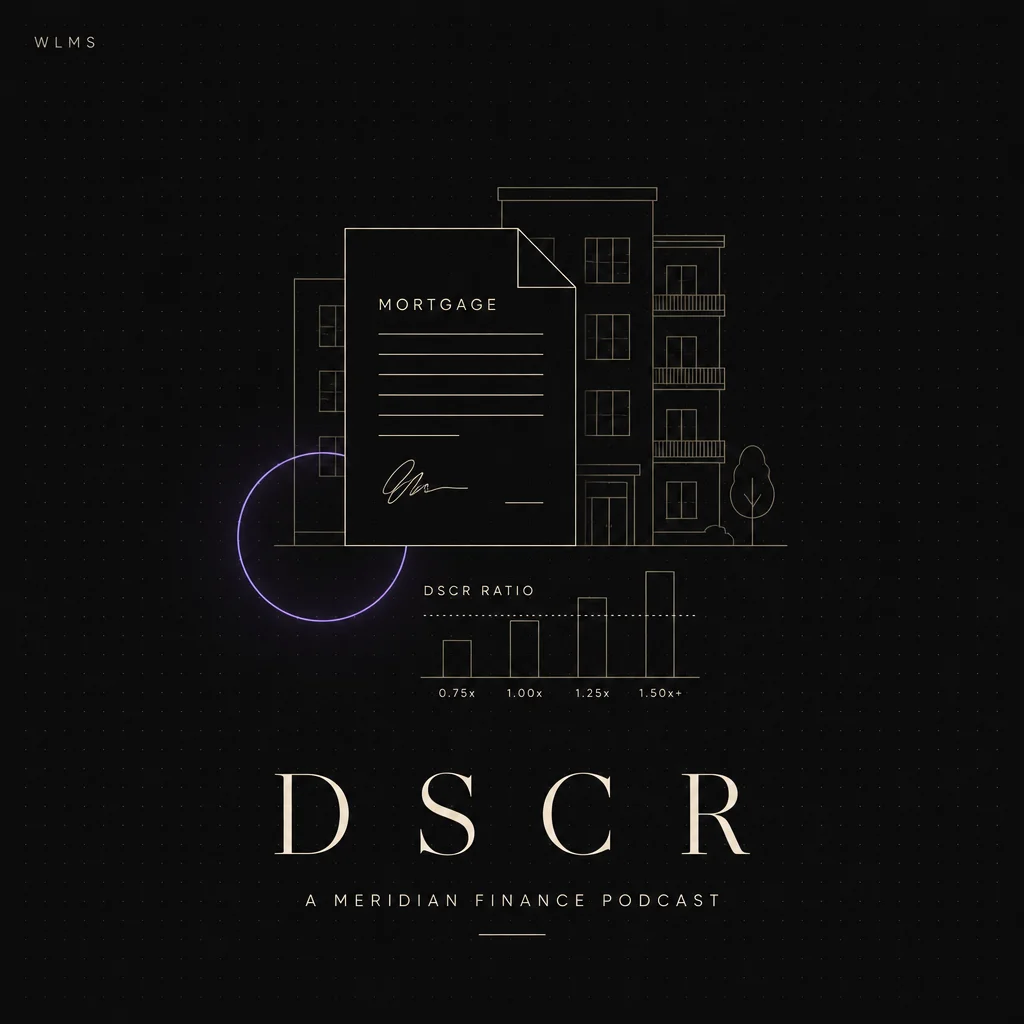
So, DCR stands for debt coverage ratio and DSCR is debt service coverage ratio. Very much the same thing. So, I discovered this years ago when I worked at the bank that on the commercial side of the institution, they were getting deals done that we couldn't get on the residential side. And I'm like, what's going on here?
Why? And I started on the residential side and it is very much based on income. But on commercial, they were looking at the property. They were looking at it like a business and they're saying, does this cover itself at the 80% loan-to-value mortgage the client is applying for?
If so, let's move forward. We're good to go.
If it didn't, right? What they would do is they'd scale back the lending and they'd say, okay, you know what? It actually covers itself at 65% loan-to-value.
Practical Steps
Let's move forward. Now, in Canada, the challenge with the residential side of things and with the residential-based lenders, even if they offer the commercial product, what happens is they still have to factor in a stress test against the mortgage. So the stress test makes qualifying for the mortgage so much harder because you're qualifying at a rate that's at least 2% higher than the rate that you're being given. Potentially more, depending on what the interest rates are at.
Now, in the States, they don't have any type of stress test or anything like that. You qualify, and when you qualify, they even have actually interest-only mortgages, which is incredible. And if that's the product you're getting, we literally put the interest-only mortgage into the DSCR and we see if it covers itself. And if it does, you're good.
Now, there is different LTVs in Canada and in the States. So I want to make this clear too since we're talking about this. In Canada, it's quite easy to get up to 80% loan-to-value of the purchase or refinance when you're buying a rental property. In the States, those LTVs are completely different.
You can get usually up to 75% on a purchase and 65% on a cash-out refinance. That's what they call it over there. However, we do have lenders that once you've established the US credit, they will go to 75% also on the refinance in the States. But there's very few lenders that do that.
Key Takeaways
So just know on the refinancing, it's not as good over there. But a lot of people are like, oh, I'm going to do the BRRRR method. I'm going to update the property, renovate it, and then go to refinance it. It's not as successful in the States because the LTVs for foreign nationals, that's what they call anyone who's not from the States that wants to buy an investment property over there.
They don't give you those LTVs that you're looking for. Okay.
So you want to be very careful of this. But back to the main topic here. So with the debt coverage ratio program or the DSCR program in the States, you can qualify based on the rental property's income.
Debt ratios do not matter. And in most cases, any property is legible for this program. There's all, there's caveats to this, right? I mean, there are some exceptions, right?
Resources
For this program, if it's retail stores, right? That might challenge a US lender because the debt service coverage ratio, it's not usually for mixed use. And I'm saying it with, you know, uncertainty because there are some exceptions to the rule. But the main rule is mixed use properties are a no-go for the DSCR program.
In Canada, the mixed use properties are absolutely fine. It's just how the programs work. So I just want to identify the two, how they're different in each country. So, so what happens because a lot of people, they don't understand that in Canada, you can use the debt coverage ratio program on even a single family house.
Now it's harder. Generally, the lenders want to see a two unit property or larger, but we have done properties that were based on single family. So what happens is when we go the commercial route in Canada, so that's to use the DCR. In the States, the DSCR is actually considered commercial as well or business purpose.
That's what they'll call it over there. But the thing is, is you're getting different underwriting styles.
Introduction
So that's why this is different. Now, keep in mind, commercial in Canada and the loans in the States, the DSCR loans in the States, they have fees. The fees vary depending on the size of the loan, so the smaller the loan, usually the larger the fee. It also depends on the complexity, the time, like how quickly you want to close.
If you're coming in and saying, hey, Scott or team, I want a 30-day closing, that's pretty easy. If you come in and say, hey, I need to close this in a week, that means we have to put other files to the side.
So you have to pay for that priority. So the fees increase if it's a rush like that. Okay, so now, caveat, and I touched on it, right, but cash flow matters. So again, if a property doesn't cash flow, the lenders in Canada are going to scale back the loan-to-value.
They do in the States as well, but they also have a program where they can just increase your interest rate because it's more risky to them. So some lenders will keep the same loan-to-values, but they'll just charge you a higher interest rate. So things are a little bit different on each side of the border. But again, you want to get the most attractive rate.
The Core Idea
We're looking for cash flow. So getting the best rates is absolutely important. But again, in the States, they do have the interest-only product. So if it doesn't cash flow, we can do interest-only.
Now, traditionally, they offer the 30-year mortgages in the States, just like Canada, but they have a bunch of lenders that have the 40-year. So keep that in mind too because we can go with the 40, which really, really helps. Now, I wouldn't suggest just go buy a home and move forward. I always suggest that you would speak to an expert on my team, set up a strategy call.
The link is in the notes and then talk to them. If you want to tap into these programs, whether it's in Canada or the States, we need to sit down, run the numbers, and make sure that this will work perfect and seamlessly for you. And the cool thing with this program is we can run the numbers up front.
So that's actually what we'll do. We'll have a client suggest to us a property.
Deep Dive
So they give us the address. We need to know the rental income of that property, the property taxes, if there is a condo fee or an estates, a homeowners association fee, right?
We need to know that. And we need to know how much the annual insurance is for the property. Now, once we know these things, we can run a cash flow analysis. Now, in Canada, for the debt coverage ratio, the lenders often don't use 100% of the rents.
They do factor in expenses such as vacancy, property repairs, property management. In the States, when we're running the cash flow calculators, they're excluding those. Only the expenses I've mentioned are the expenses they're using. So it's even easier under the same program to qualify under the States.
Now, one other thing worth noting is once you get into these programs, generally, the lending becomes unlimited. The lenders will keep lending to you. Now, they could have caps like for an example, I know in the States, I'll give you an example. One of our lenders, they'll fund 15 deals before you need to either change lenders or literally wait because in the States, they just sell up a debt.
Practical Steps
So you get the mortgage and they sell it. So a couple of years later, your mortgage statement changes and your lender changes and you're like, what the heck is this? But it's because they're selling the debt. So then once the debt is sold, those loans are off their books so they can reloan to you.
So it's really, really cool. In Canada, generally speaking, the only time I've seen caps on the commercial side with a specific lender is if they really were overexposed in a market. And they'll say, no, we're not going to move forward. But then what we do is we'll just partner with another credit union or bank and we'll continue the portfolio.
So it's not really like a dead end. It may be a dead end with that specific lender, but it's usually options. So I wanted to share this with you guys because so many investors call us that are not aware of this program and we do a lot of education regarding it.
So I wanted you to know. So if this stuck with you or somebody who this could benefit, please share this episode with them. Our goal and our mission is to help investors. That is what we are all about.
Key Takeaways
And too many investors do not know about these programs. So share the knowledge, share the wealth, and I look forward to seeing you guys on the next episode. Thank you so much for tuning into the show today. If you found value, please follow the show and rate it five stars.
It would mean the world to me. And lastly, all the resources that we spoke about are at the bottom of the show notes. Looking forward to seeing you on the next episode.